Home
HomeHAPPY NATIONAL DAY
Wishing everyone a happy National Day holiday.
When evaluating file folders for school, office, or retail supply, most buyers focus on material—PP or PVC. However, behind every high-quality folder is a critical but often overlooked factor: the welding technology used during production. Understanding the difference between ultrasonic welding and high-frequency welding helps wholesalers and distributors make better sourcing decisions, especially when quality, durability, and cost control are key.
To begin with, welding technology directly affects how a folder performs in real use. The strength of the seams, the appearance of the edges, and the product’s resistance to tearing or leakage all depend on how the material is joined.
For B2B buyers, this means welding is not just a production detail—it impacts product consistency, customer satisfaction, and return rates. In general, PP folders are produced using ultrasonic welding, while PVC folders rely on high-frequency welding. Each process is designed to match the material properties and deliver the best performance.
Looking first at PVC processing, high-frequency welding—also known as RF welding—is the standard method used to join this material. This process uses a high-frequency electromagnetic field, typically between 10 kHz and 450 kHz, to generate heat within the material rather than on the surface. Because PVC is a polar plastic, its molecules respond to this electromagnetic field by vibrating rapidly, which creates internal heat. As a result, the material softens and melts evenly at the joint area.
Once the correct temperature is reached, pressure is applied to fuse the layers together. After cooling, the seam becomes strong, clean, and highly consistent. Because of this working principle, high-frequency welding is especially suitable for PVC products that require airtight and watertight performance.
In contrast, PP file folders are typically manufactured using ultrasonic welding, which works in a completely different way. Instead of electromagnetic energy, ultrasonic welding uses high-frequency mechanical vibrations—usually 15 kHz or 20 kHz. These vibrations are transferred to the plastic parts through a welding horn. As the parts vibrate against each other, friction is generated at the interface, producing heat.
When the temperature reaches the melting point of the material, the plastic softens and bonds. After the vibration stops, the material cools under pressure and forms a solid joint. This process is fast, energy-efficient, and does not require adhesives or additional materials. As a result, ultrasonic welding is widely used in PP folder manufacturing, especially for large-scale production.
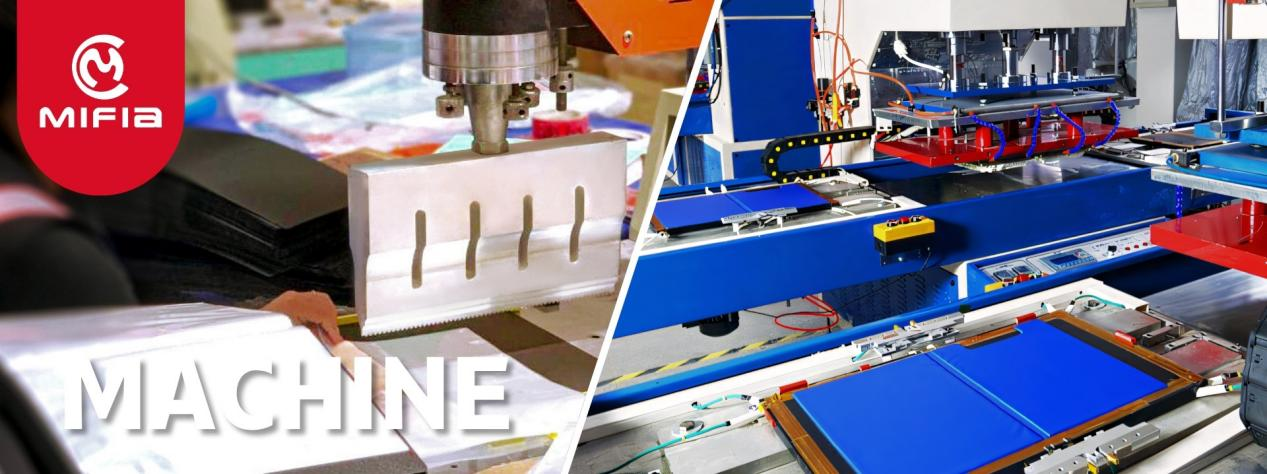
To better understand how these processes affect product performance, it is important to compare their key engineering differences.
First of all, the heating mechanism is fundamentally different. High-frequency welding generates heat within the material through electromagnetic energy, while ultrasonic welding produces heat at the surface through friction. This difference determines how evenly the material melts and how strong the final seam will be.
Another important point is material compatibility. High-frequency welding only works effectively with polar plastics such as PVC, PU, and PET. Among these, PVC is the most widely used due to its strong molecular polarity. On the other hand, ultrasonic welding is better suited for non-polar plastics like PP. Since PP does not respond well to electromagnetic fields, RF welding is not an effective option for it.
Therefore, from a technical standpoint:
PVC folders → High-frequency welding
PP folders → Ultrasonic welding
In terms of performance, high-frequency welding provides excellent sealing capability. The seams are airtight and watertight, making this process ideal for products like zipper folders, document envelopes, and protective covers. Ultrasonic welding also produces strong joints, but its primary advantage is structural strength rather than sealing. This makes it suitable for standard file folders and document organizers used in schools and offices.
Moving on to appearance, welding technology also affects how the final product looks and feels. High-frequency welded PVC folders typically have:
Smooth and clean edges
High transparency
Soft and flexible texture
In comparison, ultrasonic welded PP folders tend to be:
Slightly stiffer
More resistant to bending
Designed for durability rather than softness
As a result, PVC folders are often positioned as premium products, while PP folders are widely used for practical, high-volume applications.
From a manufacturing perspective, ultrasonic welding is faster and more cost-effective for large production runs. It supports automation and helps reduce labor and energy costs. High-frequency welding equipment, while highly precise, generally involves higher initial investment. However, it delivers consistent quality, especially for products that require high sealing performance.
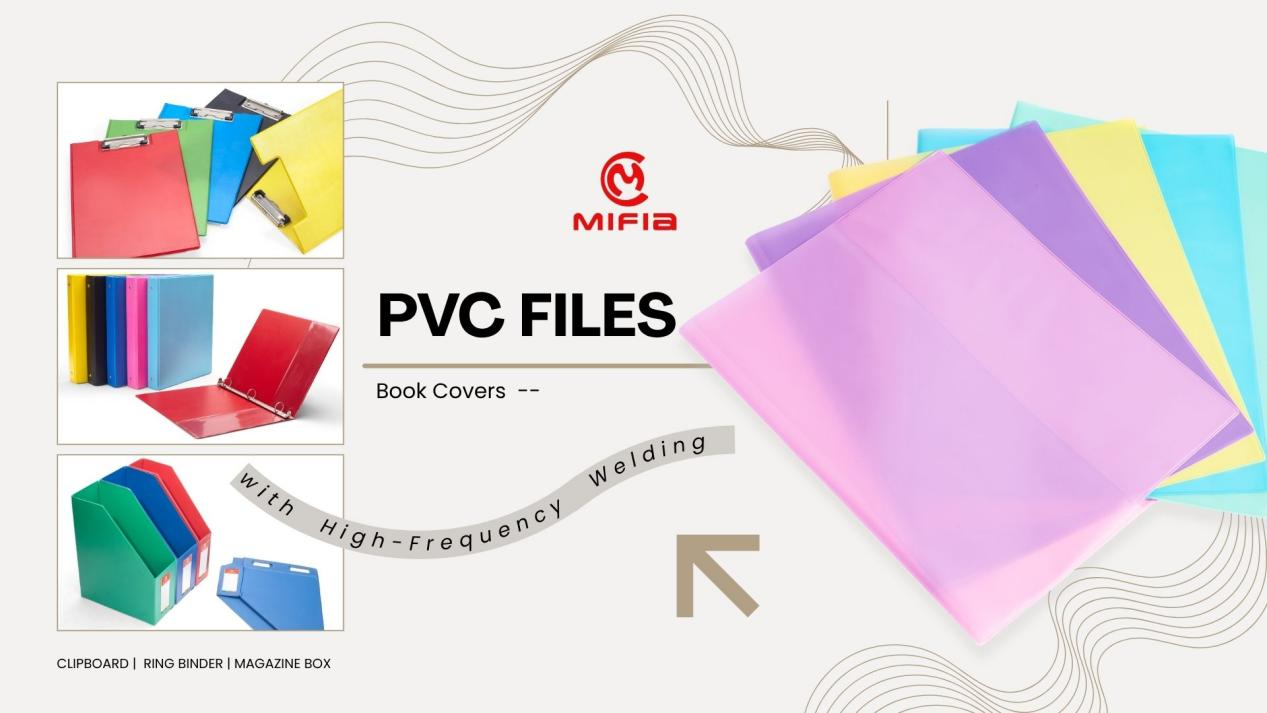
Understanding these differences helps clarify where each material and process is best used.
PVC folders are commonly used in applications where appearance and sealing are important. These include:
Transparent document folders
Waterproof zipper bags
Presentation folders
Because of RF welding, these products offer strong seams, high clarity, and a premium feel.
On the other hand, PP folders are widely used in:
School file folders
Expanding folders
Button folders
Office document organizers
Thanks to ultrasonic welding, these products are durable, lightweight, and cost-efficient, making them ideal for bulk orders and government tenders.
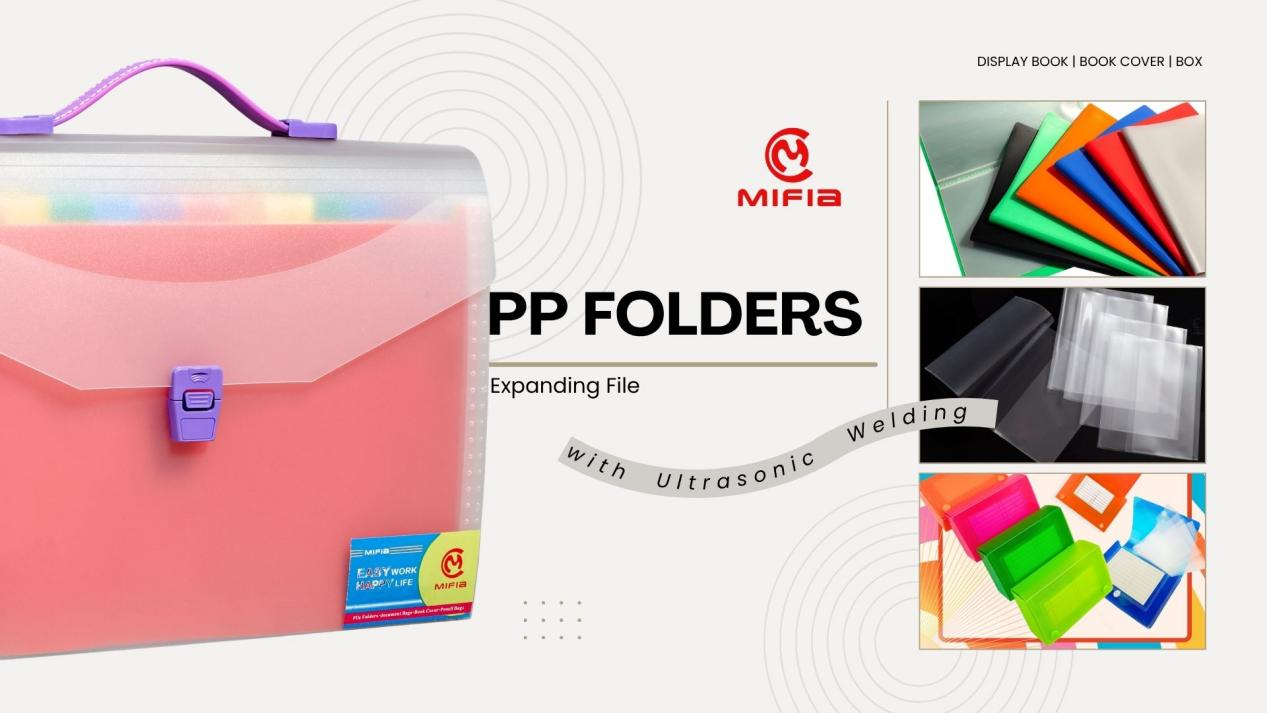
In practical production, both technologies require careful control. For PP ultrasonic welding, manufacturers must manage temperature, pressure, and vibration time carefully, since PP has a relatively high melting point and can degrade if overheated. For PVC high-frequency welding, stable frequency control and consistent pressure are essential to ensure uniform seams and avoid defects. These engineering controls are critical for maintaining product quality across large production volumes.
When selecting between PP and PVC folders, the decision should be based on your market needs rather than personal preference. If your focus is on cost efficiency, large-scale distribution, and school supply contracts, PP folders with ultrasonic welding are the better choice. If your product requires premium appearance, waterproof performance, or higher-end positioning, PVC folders with high-frequency welding are more suitable. In many cases, wholesalers and importers choose to offer both options to cover different market segments.
In summary, the difference between PP and PVC folders is not only about material but also about the welding technology behind them. Ultrasonic welding and high-frequency welding each have their own strengths, and they directly influence product quality, cost, and application. For B2B buyers, understanding these differences allows for better product selection, clearer positioning, and improved competitiveness in the market.
At MIFIA, we combine material expertise with advanced manufacturing capabilities to deliver high-quality PP and PVC folder solutions. With both ultrasonic welding systems for PP and high-frequency welding lines for PVC, we ensure consistent performance across different product types.
We support custom file folder manufacturing, including size, thickness, color, logo printing, and packaging, tailored to your target market. Whether you are sourcing for school supplies, office distribution, or retail programs, MIFIA provides flexible MOQ, stable quality, and competitive pricing.
Contact MIFIA today to request samples or get a quotation, and let us help you build a reliable and cost-effective stationery product line.

Wishing everyone a happy National Day holiday.

Which type of pencil case gives my product range the right balance of function, appearance and comme

Boost sales with premium surface finishing for custom stationery. Enhance shelf appeal, build brand
Looking for reliable heavy-duty file folders? We combine advanced material science with precision ha
Scale your stationery brand with MIFIA. We offer flexible ODM/OEM solutions, pre-tested prototypes,
How to Choose Custom Mesh Bags for Bulk Orders (Size, Material & Design Opti...
In today's dynamic business environment, effective organization is no longer a l...
Which type of pencil case gives my product range the right balance of function, ...
Boost sales with premium surface finishing for custom stationery. Enhance shelf ...
Looking for reliable heavy-duty file folders? We combine advanced material scien...