Home
HomeHAPPY NATIONAL DAY
Wishing everyone a happy National Day holiday.
In large-scale stationery production, quality control runs through the whole manufacturing process, and we at MIFIA focus on internal cross-department collaboration rather than relying only on individual QC inspection. We keep every related team connected and coordinated at each production stage, and this steady teamwork allows us to maintain unified quality standards and keep defective products at an extremely low level.
At MIFIA, our internal teams function as a united ecosystem, including design, procurement, production and quality control. Rather than working within separate boundaries, we stay closely aligned across the full production lifecycle, uphold identical quality criteria, and exchange timely updates at every key stage. Such integrated teamwork forms our rigorous QC system, firmly supporting stable and low-defect output in mass production.
Material qualification is jointly validated by the procurement and QC teams. Procurement screens qualified suppliers and confirms material compliance with project standards, while QC conducts rigorous incoming inspection on specifications, safety and workmanship. The two teams synchronize evaluation results at the initial stage, blocking unqualified materials from entering production and building the first joint quality barrier through close synergy.
This critical stage covers the full-process confirmation system, uniting design, production, QC, sales and customers together. The sales department confirms all product details to ensure they match customer expectations, and the customer provides final approval as the official standard for mass production. Design delivers finalized technical standards and structural requirements; production evaluates process feasibility and operational difficulty; QC benchmarks sample quality against predefined rules. All parties align details, confirm technical parameters and sign off collectively. Mass production only launches after full cross-team consensus, avoiding quality deviation caused by single-department judgment. This process ensures every product fully meets the standards required for OEM & ODM customized solutions.
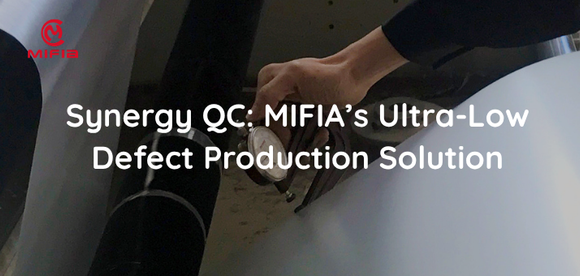
Throughout mass production, the sales department maintains consistent order follow-up and provides timely progress updates to customers. If any differences emerge between bulk production and the approved samples, or if any technical challenges or process adjustments arise during manufacturing, the sales team will communicate and confirm improvement plans with the customer immediately.
With clear customer alignment ensured, real-time monitoring then relies on close cooperation between the production and QC teams. Production strictly follows standardized process guidelines and reports on-site conditions in a timely manner. QC carries out continuous roaming inspections, monitors key procedures, and quickly identifies any deviations in craftsmanship or specifications. Timely internal communication and joint adjustments keep every production stage standardized, avoiding potential batch quality issues.
The final phase integrates the collaboration of QC, production, sales and administrative record teams. QC completes full finished-product inspection according to unified criteria; production sorts out process records and on-site adjustment logs; the record team archives material sources, sample confirmation documents and all inspection data into complete batch files. Linked responsibilities across departments realize full lifecycle traceability, making stable and low-defect output sustained by systematic synergy rather than isolated inspection.
Far beyond standalone departmental inspections, consistent product quality at MIFIA derives from cross-departmental synergy that underpins our core operational strength. We closely integrate the sales team and customer participation into the entire quality control process, with the clear goal of delivering products that fully meet customer expectations. By bridging internal workflow gaps and unifying quality standards across the entire production cycle, this coordinated mechanism delivers stable and reliable outputs, which fully qualify to meet your demands for bulk business cooperation.

Wishing everyone a happy National Day holiday.

Which type of pencil case gives my product range the right balance of function, appearance and comme

Boost sales with premium surface finishing for custom stationery. Enhance shelf appeal, build brand

Looking for reliable heavy-duty file folders? We combine advanced material science with precision ha

Scale your stationery brand with MIFIA. We offer flexible ODM/OEM solutions, pre-tested prototypes,

How to Choose Custom Mesh Bags for Bulk Orders (Size, Material & Design Opti...

In today's dynamic business environment, effective organization is no longer a l...
Which type of pencil case gives my product range the right balance of function, ...
Boost sales with premium surface finishing for custom stationery. Enhance shelf ...
Looking for reliable heavy-duty file folders? We combine advanced material scien...